News
On Purpose: Lift Others Up
May 03, 2026
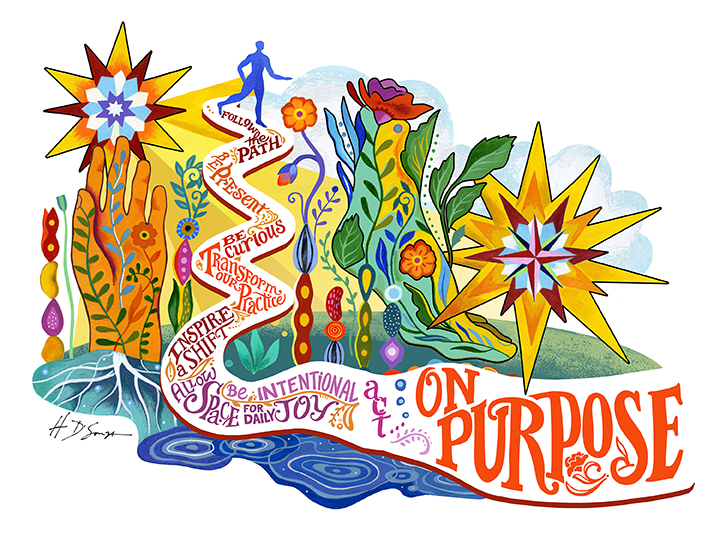

“One can choose to go back toward safety or forward toward growth. Growth must be chosen again and again; fear must be overcome again and again.” - Abraham Maslow, “Toward a Psychology of Being”
No matter my successes, there is a bit of “imposter” inside of me. Early in my nursing career, I was reluctant to call myself a leader, but I was motivated to help my colleagues and patients. I wouldn’t be where I am today if other leaders hadn’t encouraged me to step forward. They saw my potential even when I didn’t.
Imposter syndrome, or doubting one’s own potential despite adequate preparation, is often considered through the lens of personal resilience and enduring stress. Imposter syndrome is associated with increased stress and burnout, and decreased job satisfaction and performance over time. While we are all vulnerable to feelings of inadequacy, imposter syndrome has been studied in minority populations with the implication that a lack of access to support systems may contribute to the perception that success is determined by chance rather than competency. Imposter syndrome is experienced by individuals, but there are environmental factors to consider.
Because lives are often on the line in acute, progressive and critical care nursing, we leave little allowance for perceived personal failures. We are high-achieving perfectionists, and we are often hard on ourselves. Sometimes we are hard on others. It can contribute to a culture of silence and isolation. Because lives are on the line, working as a team is critical and requires systems of support. Peer support, mentorship and nurse residency programs can help connect individuals so they can talk about difficult experiences and transitions that may foster self-doubt and dissatisfaction.
As AACN president, I am getting by with a little help from my friends. Recently, my mentor called me at a fortuitous time, on the same day as a professional setback, providing a needed outlet and space to receive compassionate feedback.
I’m paying it back this week by coaching a peer on a skill they are working to acquire. We are investing in each other, and we are also building a culture of mutual support and psychological safety. There is space for learning and meaningful recognition. This is the spirit of true collaboration.
Accepting my own potential as a leader has been synonymous with seeing how I have the potential to lift those around me and accepting that I have a role in creating the Healthy Work Environment in which I want to work.
As authentic leaders, we can all help address imposter syndrome and promote psychological safety in the workplace by freely offering mutual support and lifting others, On Purpose.
How are you building a more supportive culture and lifting others? Share your thoughts
with me at onpurpose@aacn.org.