News
President's Column: Be On Purpose With Each Other
Sep 15, 2025
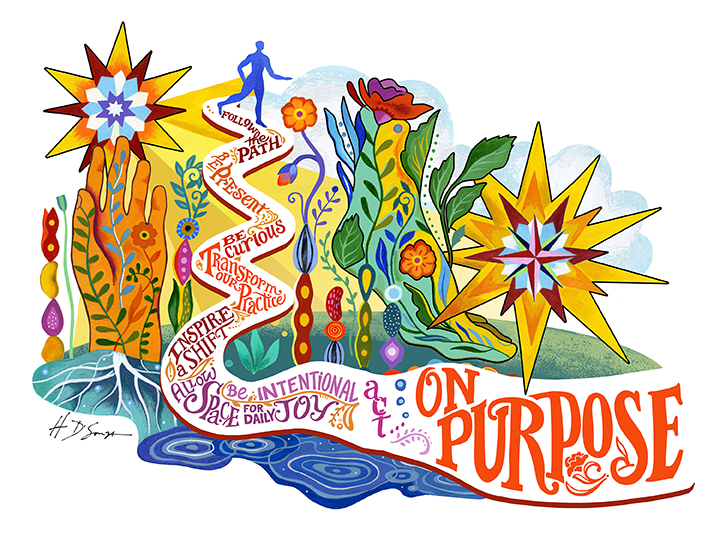

“Joy is an act of resistance.” – Toi Derricotte, Poet
As a child, I danced in the summer rain just because it was raining — a natural act of joy.
Now, when it rains I tend to duck my head and run. I’m a little sad to think that manifesting that kind of joy as an adult might require a much more purposeful effort.Purpose and joy are intertwined, but facing life’s difficult realities may cause us to focus on purpose over joy to our detriment. As healthcare clinicians facing challenges in the practice environment, we may respond by dedicating ourselves to purpose with less regard for our own comfort and joy, because what we do matters. We know it does. It must.
That sense of purpose, of mission, sometimes translates to a nurse’s insider view of the healthcare landscape, where all the problems are prominent and clearly visible. It can be overwhelming at times to be asked to do more with less.
Simultaneously, I celebrate the innovation and sheer determination in nurse workarounds. Moments of laughter and shift debriefs with colleagues are a lifeline. When the challenges get too big, focus down. Go small. It is permissible to make light in the dark. Joy is an essential act of resistance, and joy will be our comfort on the necessarily endless journey to practice improvement. The idea of joy as resistance comes from a poem by Toi Derricotte, which tells the story of the loss of a beloved pet mixed with deeper themes of individual agency and caring. For nurses, we know that joy and loss are never separate, but intertwined, shaping how we care for others and ourselves.
We know perfect doesn’t exist and our work will never be done. I am not the first or the last to say that healthcare improvement is not possible without a workforce that can find purpose and joy in our daily work to sustain us. Joy may be what fills us with a sense of purpose once again.
The New York Times bestseller “The Good Life: Lessons From the World’s Longest Scientific Study of Happiness,” by Robert Waldinger, MD, and Marc Schulz, PhD, shares distilled observations on the meaning of life and happiness from the 85-year-long Harvard Study of Adult Development. What is the secret to health and happiness? Relationships. It turns out that we cannot do it without each other. Yet, polarization is a trend.
In a polarized world, the purpose is the objective, the goal, the mission. In an inclusive world, to begin with purpose is to begin with intention and allow space for differences.
To build stronger connections, we must find where we align, where we are more alike than we first thought. Be On Purpose with each other. Resist polarization and assume positive intent. May joy follow, and be an opening to a better future.
In subsequent columns, I will explore more ways we can be purposeful in our practices, seek stronger connections and uncover joy. And I look forward to hearing more from you.
What’s one step you will take to be On Purpose with a colleague? Share your ideas with me at onpurpose@aacn.org.