I felt like the teamwork was so much better … and I noticed such a difference in the nurses working together, just being happier, not so stressed out all the time.
Alicia Sedita, BSN, RN
When nurse leaders looked around their 66-bed cardiac step-down unit at Providence Sacred Heart Medical Center, they saw a challenging pattern: colleagues missing breaks and lunches, staying late to finish work and struggling to collaborate effectively. The unit was facing a burnout issue for its nurses.
Their solution? A buddy system designed to foster collaboration and mutual support among nursing staff. The idea came after participating in AACN Clinical Scene Investigator (CSI) Academy. This concept has transformed the culture of their unit, demonstrating how an innovative idea can improve healthy work environments.
Before the Change: High Workload, Low Collaboration
The unit – which cares for cardiac transplant patients, and those with congenital heart issues or complex conditions such as ventricular assist devices and gastrointestinal bleeds – operates at a demanding pace. Nurses typically care for three patients during day shifts and four during night shifts, providing total patient care that includes promoting early mobility for post-surgical patients.
"We were constantly tied down and having this issue of meeting all the patients’ needs,” said bedside nurse Rasa Morris, BSN, RN. “You are essentially doing full patient care."
The unit had minimal support infrastructure: one nurse assessment coordinator for day shift on the 36-bed south wing, another for night shift, and one assistant nurse responsible for responding to codes throughout the entire hospital tower while also monitoring patients. Policy required nurses to stay with patients during bathroom visits due to medications that could affect balance or consciousness, further limiting the nurses’ abilities to collaborate or take breaks.
The consequences were clear: "We're missing breaks, we're missing lunches, there is no teamwork," Morris said. "We can't get to all the patients’ needs. So that's a patient safety issue."
The Data to Drive Change
The impetus for change came from the Healthy Work Environment Assessment Tool (HWEAT) survey, which revealed that "True Collaboration" on the unit was in the "somewhat healthy" range – lower than most other categories measured.

For Morris and fellow bedside nurse Alicia Sedita, BSN, RN, the data confirmed what they had observed firsthand. "We both saw the stress that all the nurses were feeling," Sedita said. "We just felt like this would be a good project to kind of boost morale and get back into more of a teamwork unit."
Implementing the Buddy System
The nurses first needed to get buy-in from their teammates, so they hosted educational sessions over several shifts.
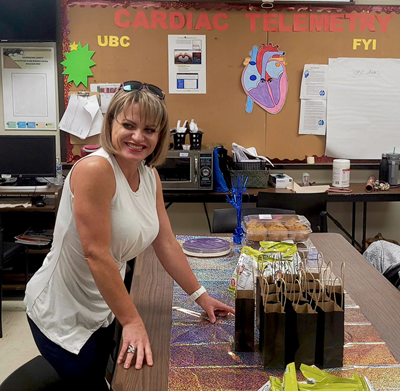
We explained to our colleagues why we were doing this – to reinforce teamwork, reduce burnout, have fewer missed lunches and missed breaks, and just build more support for each other," Morris said.
The nurses then solicited feedback. "We put up a blank whiteboard and wrote, 'What's your buddy system look like to you? Give us ideas for what you want this to be,'" Sedita explained. They gathered perspectives from experienced nurses and new graduates alike to understand what a supportive system would mean to different staff members.
After collecting feedback, the nurses developed a pilot program. Implementing the new system included several elements:
Leadership Support: The project received support from the unit's director, nurse managers and assistant nurse managers from the outset, which proved crucial for success.
Strategic Pairing: Charge nurses assigned buddies thoughtfully, pairing seasoned nurses with newer staff members, and grouped float nurses with core unit staff to facilitate knowledge transfer and support.
Engagement Strategies: The team used "food bribes," goody bags and gift cards to maintain engagement during the program’s rollout. It proved to be an effective approach for keeping staff invested.
Champions and Persistence: Despite some initial resistance for change, advocates for the new system helped create a ripple effect of adoption. "I was worried about some resistance that we initially received upon launching," Morris said. "But we kept going and eventually showed that the buddy system could be beneficial for everyone."
Results: Less Burnout, More Teamwork
After the first year of launching the program, missed breaks decreased significantly, which also led to reductions in overtime accrual. That meant a win for both nurse well-being and the unit's budget. The team also saw improvement in first-year turnover rates for new caregivers.
"I felt like the teamwork was so much better," Sedita said. "Just looking at the unit overall, the morale was pretty low when we started this, and I noticed such a difference in the nurses working together, just being happier, not so stressed out all the time."
The buddy system proved especially valuable for new nurses entering the high-acuity environment. "They're definitely scared, and there is a lot on their plate when they first start," Morris said. "So having a supportive system like this is crucial for their success and retention.
Lessons for Other Units
For teams in similar situations considering a buddy system, Sedita and Morris offer several recommendations:
Start with baseline data: Use tools such as the free HWEAT survey to identify specific areas for improvement and measure progress over time.
Involve stakeholders early: Engage both leadership and bedside staff from the beginning to ensure buy-in and gather diverse perspectives.
Stay flexible: Be open to feedback and willing to adjust the approach as the project evolves.
Keep re-educating: On units with higher turnover, integrate the buddy system into orientation and continually reinforce its importance with staff.
Persist through resistance: Change takes time, and initial pushback doesn't mean the initiative won't succeed.
A Stronger, Healthier Team
What began as a response to low collaboration scores has evolved into a shift in how the unit operates. The buddy system has created a culture where nurses feel supported, breaks are protected, and teamwork is the norm rather than the exception. And it helps foster a healthier work environment that benefits the nurses – and the patients and families they serve.
Additional Resources
Share Your Story
Do you have a successful staffing solution that works in your unit or facility? We want to hear from you.
Submit your solution.