I was captivated by the ability to bring advanced, lifesaving care directly to patients when and where they needed it most.
Anna Sapp, BSN, RN, CCRN, C-NPT
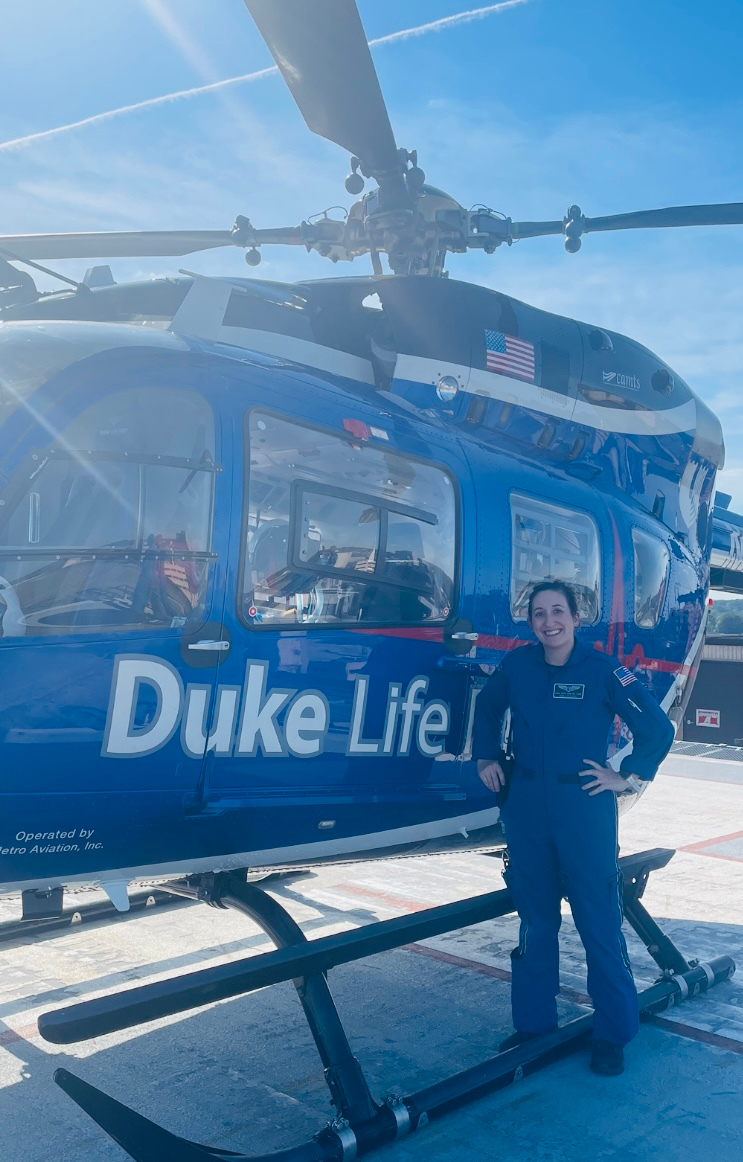
For Anna Sapp, BSN, RN, CCRN, C-NPT, the path to becoming a Duke Life Flight nurse began with a chance ride-along that sparked a lifelong passion for critical care transport. Today, she combines experience in EMS, emergency nursing and neonatal intensive care to deliver advanced, lifesaving care to patients across North Carolina. In this interview, Anna reflects on her journey, the teamwork behind every mission, and the privilege of caring for patients during some of life’s most vulnerable moments.
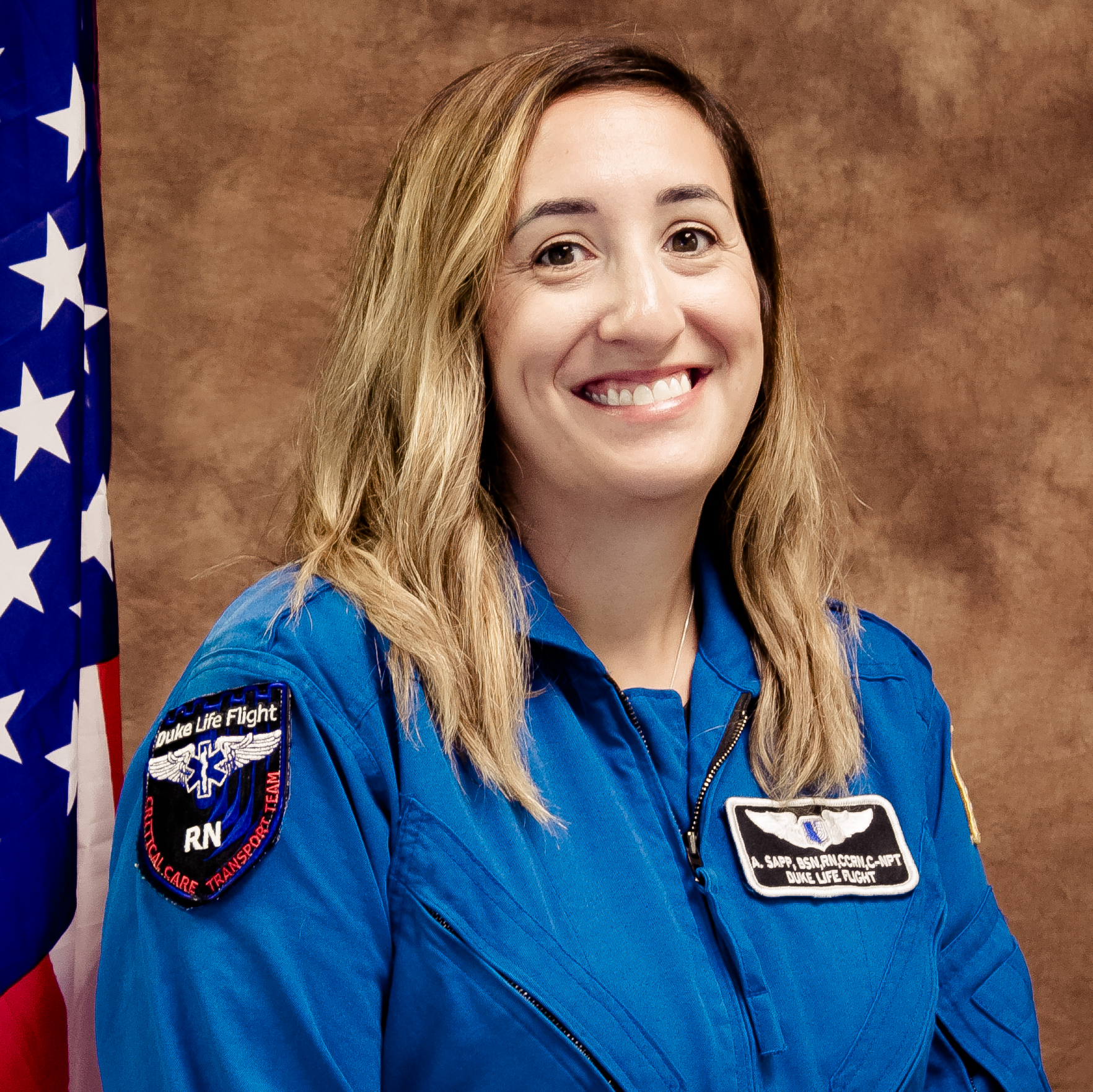
Why did you become a nurse, and what eventually drew you to flight nursing?
Ironically, I became a nurse almost by accident, but it has been one of the best things to ever happen to me. After high school, I initially pursued a career in firefighting and EMS. As a volunteer firefighter and EMT with Durham County EMS, I developed a passion for emergency medicine and had my first exposure to flight medicine.
I was fortunate to win a ride-along with Duke Life Flight through a raffle at an annual employee recognition event, and that experience changed the course of my career. Watching a highly specialized team deliver critical care in unpredictable environments was inspiring. I was captivated by their ability to bring advanced, lifesaving care directly to patients when and where they needed it most.
At the time, Duke Life Flight crews consisted exclusively of nurses (today, our adult team is staffed by an RN and a paramedic, while our neonatal-pediatric team is staffed by an RN and a respiratory therapist), so I knew that if I wanted to pursue flight medicine, I needed to become a nurse. Shortly afterward, I was accepted into Watts School of Nursing (now Watts College of Nursing), and that decision set me on the path to the career I had envisioned from that very first flight.
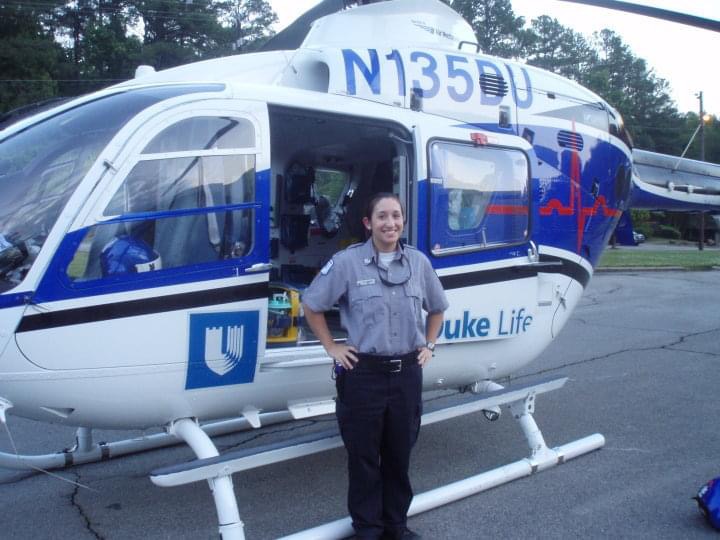
Tell us about your journey to becoming a Duke Life Flight nurse.
During nursing school, I worked as a CNA in the Duke Emergency Department, and after graduating, I transitioned into an RN role there. It didn’t take long for me to realize that caring for neonatal and pediatric patients pushed me well outside my comfort zone. At the time, Duke Life Flight did not have separate adult and neonatal-pediatric teams, so every flight nurse was expected to care for patients of all ages. I knew that if I wanted to pursue flight nursing, I first needed to build a strong foundation caring for the youngest and most critically ill patients.
That realization led me to the Duke NICU — a transition that became one of the most challenging and rewarding experiences of my career. I had never even held a healthy newborn before starting there, and I vividly remember being nervous for months, to assess a baby’s fontanelle. Over time, that uncertainty turned into confidence, and I fell in love with neonatal critical care.
I spent the next seven years at the bedside, developing the clinical judgment and technical skills required to care for some of the most vulnerable patients. During that time, transport medicine also evolved. Dedicated adult and neonatal-pediatric transport teams became the industry standard, and Duke Life Flight grew into one of only eight programs in North Carolina with a specialized neonatal-pediatric transport team. Today, it is also one of only two programs in the state capable of transporting neonatal and pediatric patients requiring ECMO and inhaled nitric oxide.
My background in EMS, emergency nursing and neonatal intensive care gave me the experience and perspective to thrive in that environment. When I felt both professionally and personally ready, I took the leap into flight nursing — a career that has brought together every part of my journey.
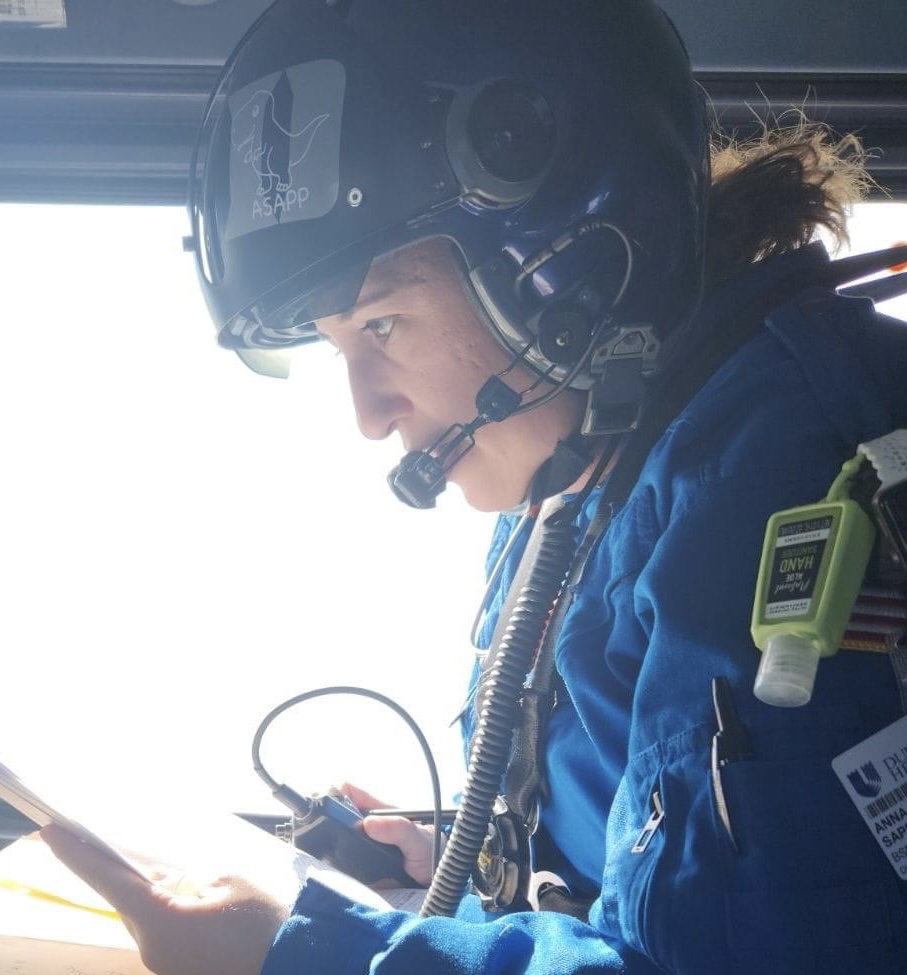
Tell us about a transport mission that has stayed with you, and why it was meaningful.
Rather than highlighting a single transport, I prefer to reflect on what every mission has taught me. Every patient and family has a story, and each encounter has reinforced that our impact extends far beyond the clinical care we provide.
While we cannot always change a patient’s diagnosis or ultimate outcome, there is always an opportunity to make a meaningful difference. Sometimes that means delivering exceptional critical care. Other times, it means offering reassurance during an incredibly difficult moment, listening to a worried parent, advocating for a patient’s needs, or simply making someone smile when they need it most.
To me, that is one of the greatest privileges of flight nursing. We care for patients during some of the most vulnerable moments of their lives, and regardless of the outcome, we have the opportunity to provide compassion, dignity and hope. Those moments — more than any single transport — are what stay with me and continue to shape the nurse I strive to be.
What does teamwork mean in the transport environment?
Teamwork is the foundation of transport medicine. Every successful transport depends on seamless communication and collaboration long before we arrive at the patient's bedside. Before a mission even begins, we coordinate with referring and accepting physicians, gather critical information and develop a plan with our transport partner. Once we arrive, we assume care, communicate with the patient's family when appropriate and ensure a safe transition. During transport, my partner and I rely on each other’s knowledge, situational awareness and clinical judgment to provide the highest level of care in a dynamic environment.
At Duke Life Flight, every member of the transport team is trained in skills such as intubation, umbilical line placement, needle decompression, medication administration and ventilator management, allowing us to work seamlessly together regardless of our credentials.
Finally, we collaborate with the accepting team to ensure a thorough handoff and continuity of care. Transport medicine requires us to work with professionals from a wide variety of disciplines, backgrounds, personalities and experience levels. Effective teamwork means treating every member of that multidisciplinary team with respect, communicating openly, and recognizing that we all share the same goal: providing the safest, highest-quality care for our patients.
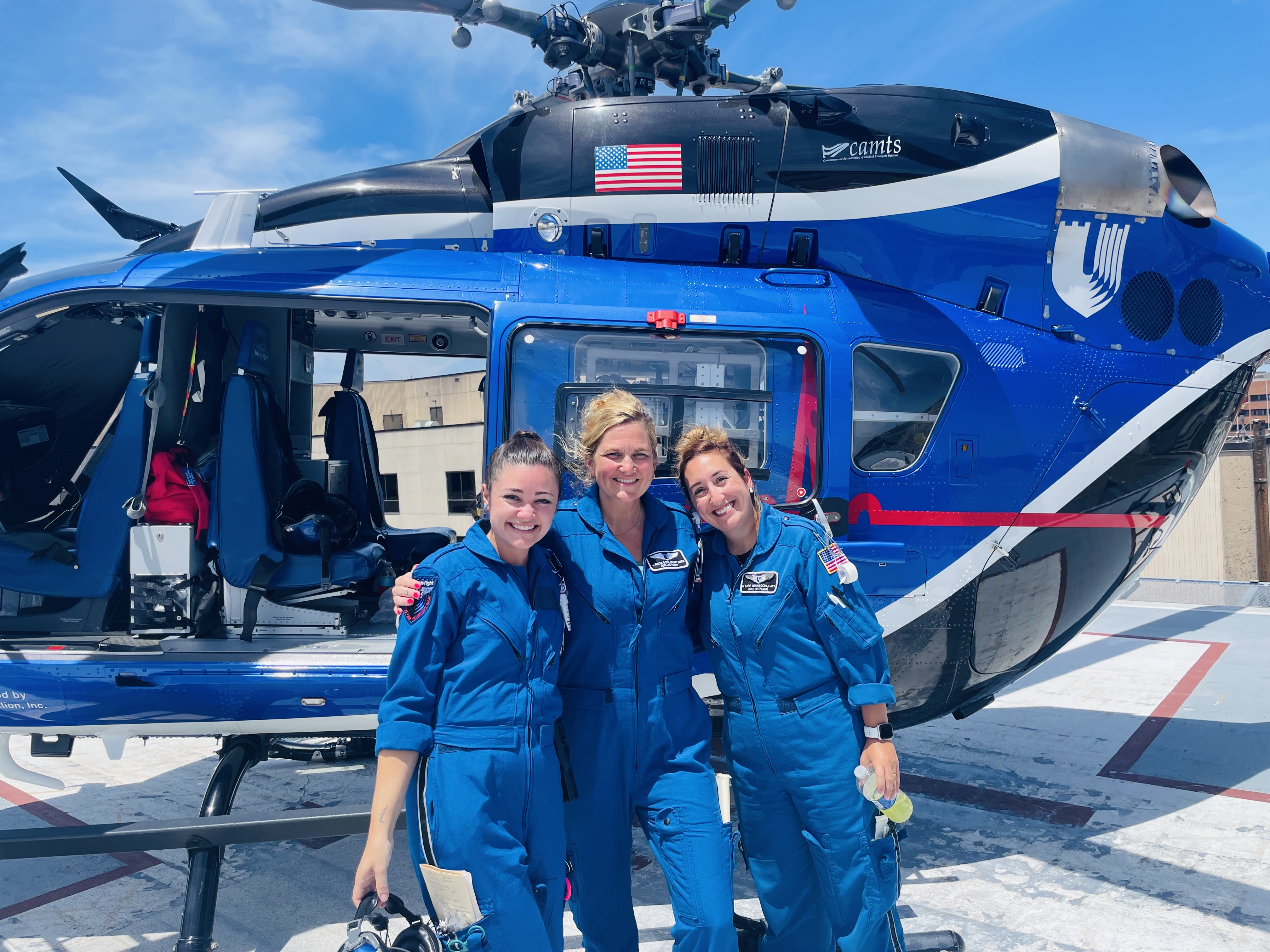
What would people be surprised to learn about you outside of your flight suit?
People are often surprised to learn that I’m not much of an adrenaline seeker outside of work. While flight nursing is fast paced and high intensity, I find balance by embracing a much quieter life when I’m off duty.
You’ll usually find me sitting on my porch with a good book, working on a craft project or tending to my flower garden. I genuinely enjoy the simple things. Those slower moments help me recharge and allow me to return to work focused, grounded and ready for whatever the next shift may bring.
I think that contrast is one of the things I appreciate most about this career. I love the challenge and intensity of flight nursing, but I equally value the peace and simplicity of life outside the flight suit.
What's one thing people don't realize about flight nursing or critical care transport?
One of the biggest misconceptions about critical care transport is that our job is simply to move patients from one hospital to another. In reality, we bring the capabilities of a tertiary-care ICU directly to the patient’s bedside, wherever they are.
Many of the facilities we serve do not have the same specialized resources available at Duke. Our role is to stabilize critically ill patients using advanced therapies and critical care interventions, often spending significant time at the bedside before transport even begins. Before we transport patients, we prepare them to safely tolerate transport while delivering the same high level of care they would receive in a Duke intensive care unit.
What many people also don’t see is the complexity behind every mission. Safe transport requires extensive planning, communication and logistical coordination in addition to advanced clinical decision-making. Every transport is a carefully orchestrated effort, and much of the work that makes it successful happens long before the aircraft or ambulance starts moving.
What motivates you to continue doing this work?
Our motto is “One Mission, One Team,” and it’s something I truly believe in. Every transport is a reminder that our work is bigger than any one individual — it’s the collective effort of an entire team dedicated to giving patients the best possible chance. What continues to motivate me is the opportunity to care for children across North Carolina and help ensure they have access to the specialized care available at Duke, regardless of where they live. Being able to bring advanced critical care directly to patients and safely transport them to the resources they need is an incredible privilege. Knowing that I can make a difference during one of the most vulnerable moments in a child’s life — and support their family through that journey — is what inspires me to keep doing this work. It is a responsibility I never take for granted and one of the greatest honors of my career.
If you could tell a future flight nurse one thing, what would it be?
Don’t give up. Learn everything you can from everyone you meet. Ask questions. Stay humble. Stay kind. Stay safe.
Share Your Story
Do you or someone you know have an inspiring nurse story to tell? We want to hear from you.
Submit your story idea