Meaningful education isn’t about making complex material look easy. It’s about doing the quiet, often tedious work of truly understanding a concept so I can help others do the same.
Caitlyn Nichols, BSN, RN, CCRN-CMC
Caitlyn Nichols grew up watching her mother navigate the highs and lows of nursing, and it sparked her own drive to make every decision count. From the ICU to the Cardiac Catheterization Laboratory (Cath Lab), she has turned complex critical care concepts into clear visual tools that help nurses think ahead and act confidently. Blending clinical expertise with creativity, Caitlyn’s work makes the science behind the bedside accessible and life-saving for nurses everywhere.
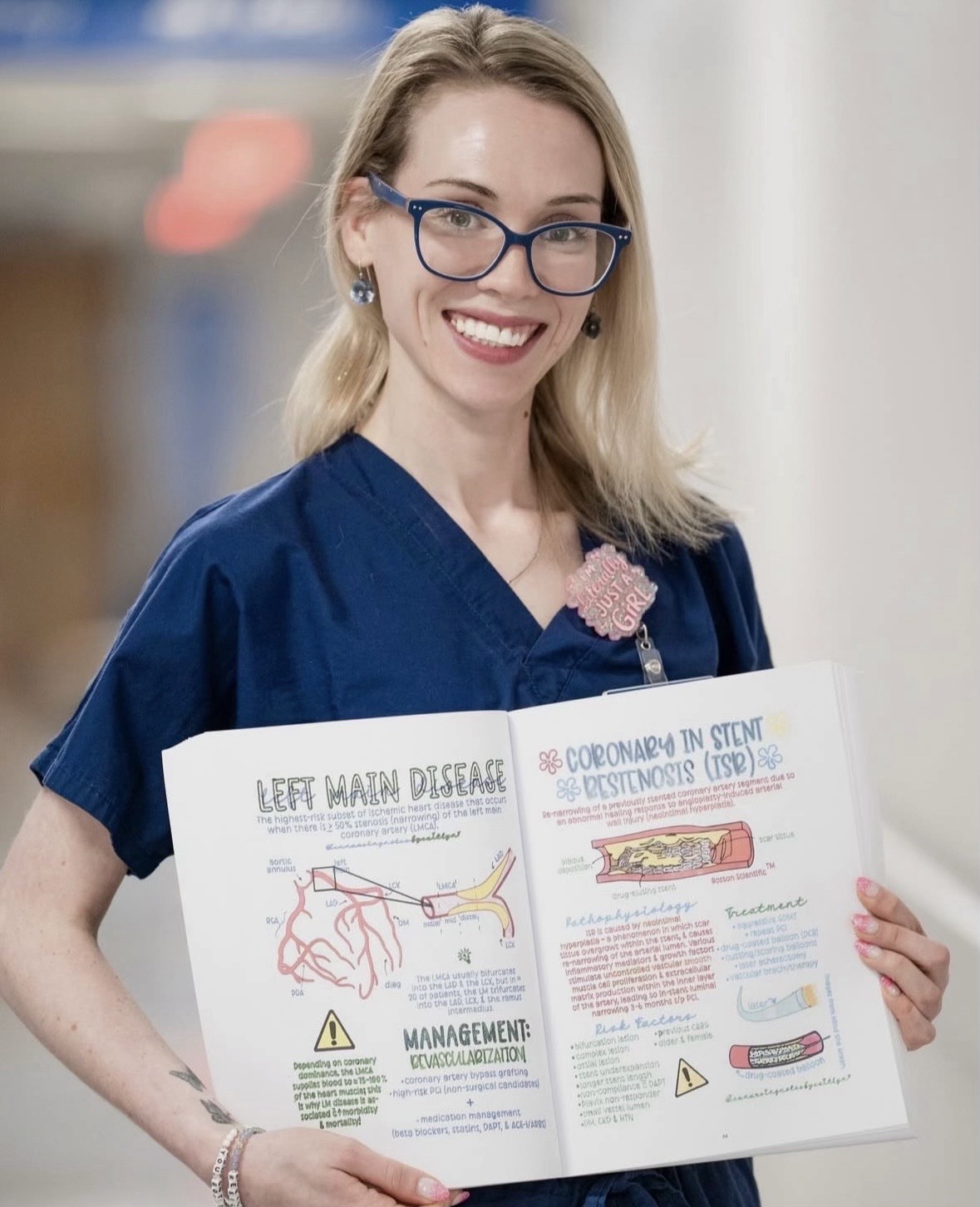
What originally inspired you to become a nurse, and how did it lead to the creation of your visual tool?
My mother is a nurse, so I grew up with a realistic view of the profession: the long hours, the emotional weight and the hard work that often goes unnoticed. I wasn’t drawn to an idealized calling, but to the responsibility. Nursing demands close attention and sound judgment. Your decisions carry consequences, and small details matter.
When I started in the ICU as a new grad, that responsibility felt immediate and overwhelming. I realized quickly that safe care meant understanding the “why” behind what I was seeing, not just completing tasks. As a visual learner, I began drawing out complex concepts to work through the physiology. It helped me slow down, be more proactive, and see the broader clinical picture instead of just reacting to the monitor.
What began as a personal study tool gradually became something I shared on my educational Instagram page, @icunursingnotesbycaitlyn. My focus has since shifted from my own learning toward creating resources that help other nurses better understand the physiology behind what they’re seeing, so they can think ahead and intervene earlier.
How did your early experiences as a new ICU nurse influence the way you approach nursing education today?
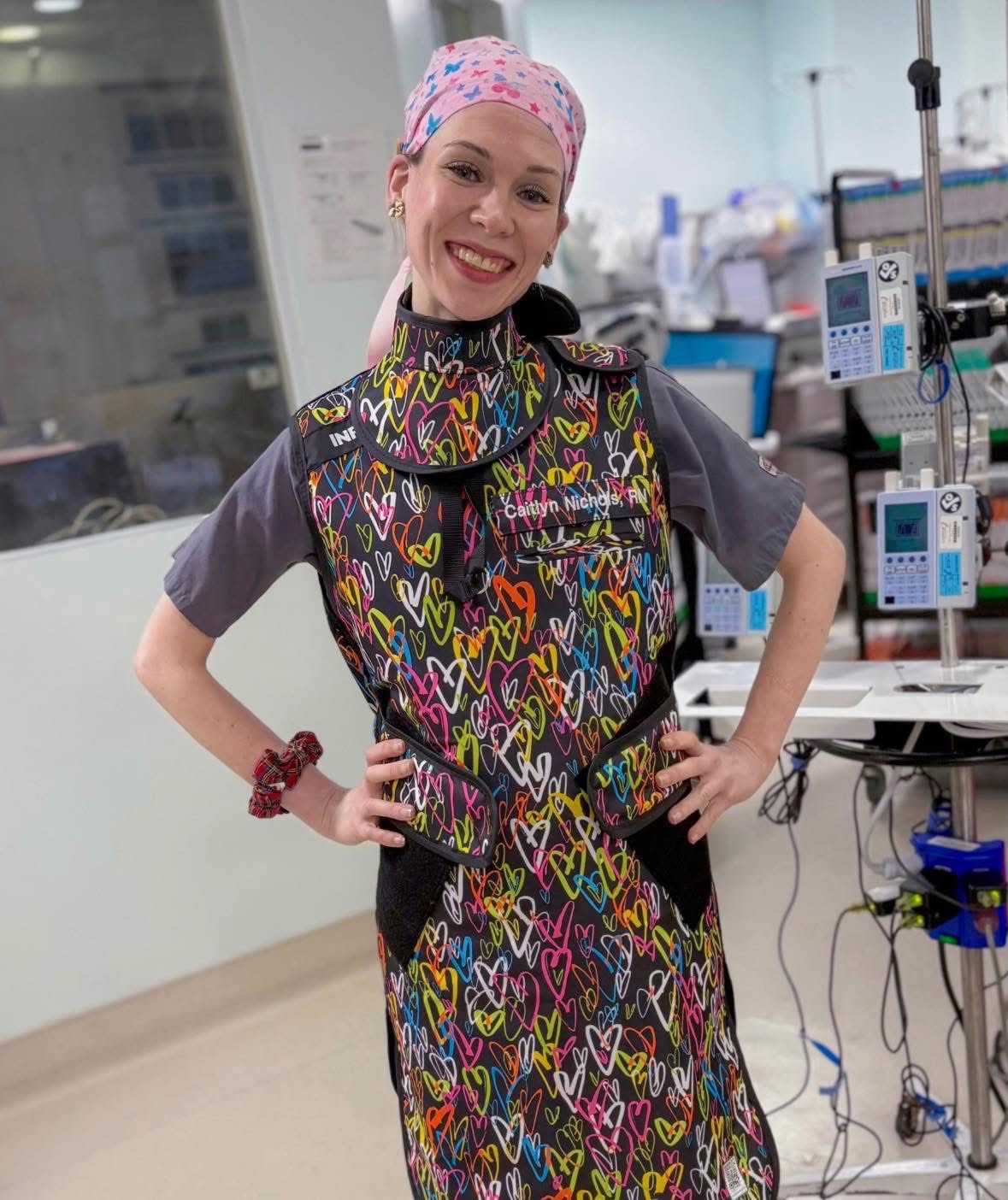
Starting in a Cardiac ICU during the pandemic was a challenging introduction to nursing. Like many new grads, I was task-oriented and trying to survive the shift. But I quickly realized that critical care requires a different and higher level of thinking; we are often taught what to do, but not always why we are doing it.
While still on orientation, I was involved in a code. I knew which medication came next because I had memorized the ACLS algorithm, but I couldn’t explain why we were giving it. That moment taught me that memorization isn't the same as understanding. I started sketching complex critical care concepts and broke them down in a way that was easier to understand; if I couldn’t visualize a process or explain it simply, I knew I hadn't mastered it yet.
Now, when I create a visual, my focus is on how the different pieces connect. It’s less about following an algorithm and more about understanding the logic behind what you see at the bedside. That clarity changes how you assess a patient and anticipate clinical changes. My goal
isn’t to oversimplify critical care, because it’s inherently complex; it’s to offer the insight I needed when I was a new nurse.
Your social media followers know you as a visual learner, an artist and a cardiac educator. What is something about you that would surprise your community?
People are often surprised to learn that I love skydiving, rock climbing and roller coasters. I’ve always liked a little adrenaline, which probably makes sense given that I worked in the ICU and now the Cath Lab.
Climbing, for me, has a similar rhythm to nursing. When I hit a challenging section on a rock wall, I’ve learned that adrenaline doesn’t help unless I’ve already worked through the moves. In those moments, I have to rely on what I already understand based on past experiences, not what I’m trying to figure out on the fly.
That’s exactly how I approach learning at the bedside. Drawing helps me slow things down and work through the physiology ahead of time. It allows me to stay steady and think clearly when something unexpectedly changes, rather than trying to figure it out under pressure.
What motivated you to transition from the ICU to the Cardiac Cath Lab?
I have a lot of respect for ICU nursing. It shaped my clinical judgment and gave me a strong foundation for caring for critically ill patients. Over time, I realized I was most drawn to the moments when a single intervention could quickly change a patient's course.
The cardiac cath lab offered that opportunity. It’s still a high-acuity environment where timing, physiology and teamwork come together, and the impact of the work is often immediate. Cardiac physiology and hemodynamics have always clicked for me, and the cath lab lets me put that understanding into practice. Being able to see the effects of an intervention in real time is incredibly rewarding and aligns with how I think as a nurse.
What is one thing you wish others understood about Cath Lab nursing?
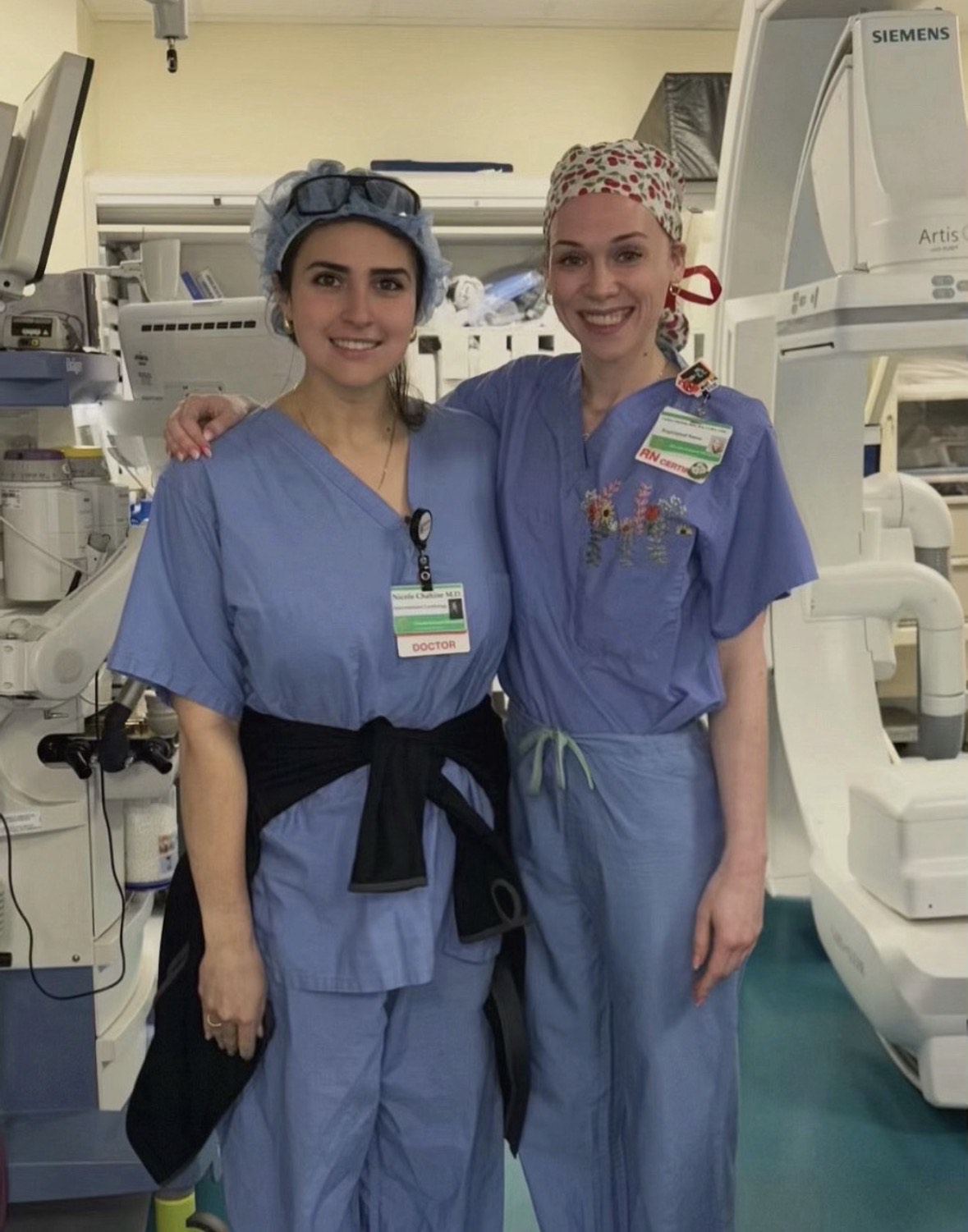
The reality of being on call is often misunderstood. It isn’t just being "available.” It means responding to high-acuity emergencies in the middle of the night with a small, specialized team and no backup. Standing in heavy lead for long cases is physically demanding, and managing complex emergencies at all hours brings a very specific kind of fatigue.
What makes it work is the team. There is a quiet coordination that happens when everyone knows their role, even at 2 a.m. You rely on one another’s preparation and judgment, and that shared accountability allows everyone to anticipate needs and respond without hesitation. That level of trust is one of the things I value most about the specialty.
From bedside nurse to creator, what experiences have had the biggest impact on who you are today?
Realizing that struggling to learn wasn't a weakness was a turning point. Because concepts didn’t always come easily, I had to work harder to deconstruct them. That effort made me a more thorough nurse; I learned to slow down, break information apart and constantly ask "why."
Seeing other nurses from all around the world connect with my drawings showed me I wasn't alone in needing a different way to bridge theory and practice. Knowing that others now rely on my resources carries a significant responsibility. It pushes me to stay grounded in evidence and open to feedback. Accuracy at the bedside isn't negotiable.
Ultimately, meaningful education isn’t about making complex material look easy. It’s about doing the quiet, often tedious work of truly understanding a concept so I can help others do the same.
What’s next for your career?
I don’t have a rigid five-year plan, and I’m comfortable with that. Right now, my focus is on the second edition of Cardiac Critical Care Made Visual. My goal is to better bridge the gap between complex mechanics and what nurses actually see at the bedside to help take the guesswork out of high-acuity moments.
I’m also staying in the Cath Lab. I’m still early in my career, and direct patient care keeps me grounded in the clinical realities that shape my work. While I plan to return to school eventually, I’m in no rush to leave an environment where I’m well-supported and still learning every day.
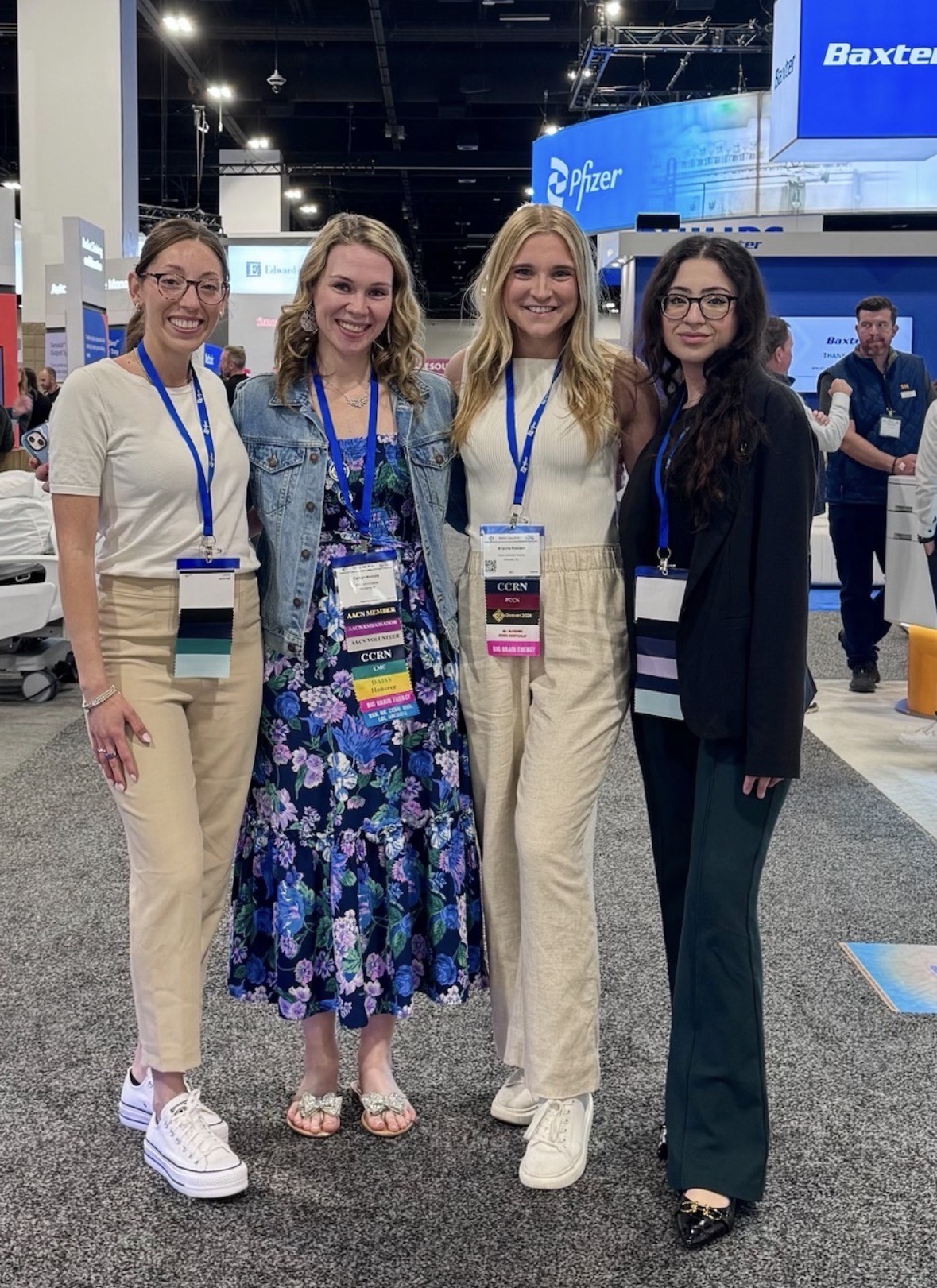
Beyond that, serving as an AACN Ambassador keeps me connected to a broader community of critical care nurses. I try to attend NTI every year because it’s incredibly motivating to be around people who are so deeply invested in the profession and committed to being lifelong learners. In a field where burnout is a constant concern, reconnecting with that kind of energy is both grounding and motivating.