Podcasts are an effective learning tool because of their accessibility and portability. If you miss anything, you can always go back and listen to it again.
Jody Hernandez, RN
What if professional development could happen while driving to work, walking the dog or washing dishes? For nurses Jody Hernandez and Sarah Lorenzini, podcasts have become more than a convenient way to learn — they’re a way to spark curiosity, share stories and bring new ideas back to the bedside.
Jody helped launch a podcast club in her ICU, where nurses listen to episodes together and explore how the ideas can be applied to their daily practice and patient care. Sarah, a nurse educator, rapid response nurse and host of the Rapid Response RN podcast, has seen firsthand how storytelling can make education more engaging and accessible.
In this conversation, they discuss the power of podcasts as a learning tool, the importance of creating space for meaningful dialogue, and how listening together can strengthen both nursing practice and community.
Tell us about your journey as a nurse and how podcasts became part of it.
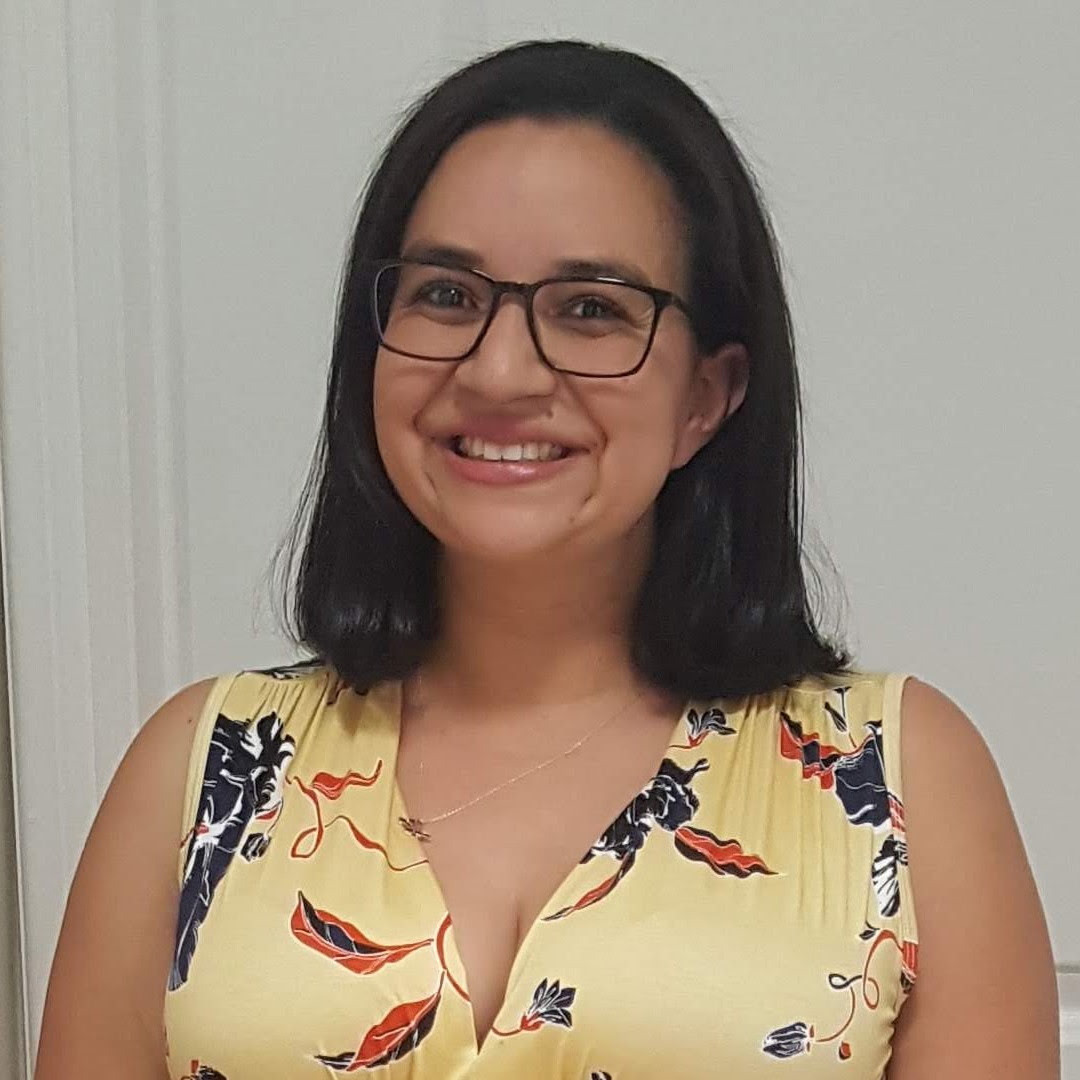
Jody Hernandez: My name is Jody Hernandez. I’ve been a nurse for 15 years at Providence Health Services. I was a new grad at Providence Tarzana in California, in med-surg, and then I worked in oncology for two years. Since then, I’ve been in critical care at a sister hospital, Providence St. Joseph in Burbank. Just last year I took on a leadership role, and now I’m assistant nurse manager of our unit.
I started listening to podcasts when they first came out mainly because there was a radio show in LA I liked. And they moved into a podcast format, so if you didn’t catch the radio show in the morning, then you could listen to the recording afterward.
That was my introduction to podcasts. And after that I delved into true crime. I loved listening to true crime podcasts. Once this all started with the podcast club on our unit, I realized there are nursing podcasts out there. So I started listening to nursing or medical podcasts and taking in a lot of information and education.
Sarah Lorenzini: I’m Sarah Lorenzini. I am a nurse educator and rapid response nurse and host of the Rapid Response RN podcast. And I’ve been a nurse for 21 years.
I definitely didn’t go to nursing school with the intention of being a nursing education podcast host, but I love being a nurse so much. And about midway through my career, I discovered I love teaching nursing as much as I love being a nurse. I started in the ER. I worked in the CVICU. I worked as a rapid response nurse. Got my master’s degree in nursing education. I taught as a nursing professor for a year.
I became the ER nurse educator, did that for a while and then COVID hit. And as much as I loved being an educator, I wanted to be in the trenches with my team. I actually started the rapid response team at my hospital and loved being at the bedside again, but then I missed being an educator. That’s what drove me to have the podcast.
And I would try to teach nurses at the bedside: “This was a great example of a medical emergency and how we can respond to it in the nurse’s role. And here’s the pathophysiology.” But there’s no time for that sometimes, especially in my role responding to emergencies. It was actually my husband who encouraged me to start the podcast.
What I didn’t realize after publishing my first three episodes was that nurses, not just at my hospital but across the globe, needed this educational format. Nurses in Qatar and Australia and the UK were contacting me about how helpful the episodes were. And so I realized this is a great teaching modality, because it’s so accessible to so many nurses, but also wherever they are.
How did the idea for a podcast club in your ICU come about?
Jody: The idea of a podcast club in our ICU was born from our director. She had listened to a podcast episode called “Walking Home From the ICU,” about the A-F bundle on ICU Liberation. And she wanted to figure out a way that she could get all that information out to our nursing staff and have them work it into their daily practice.
And there was no real way to assign these podcasts to nurses without compensating them. So we started talking, and we realized we already have an ICU journal club. So how about if we do a podcast club where you listen to an episode, and then you come together with your colleagues and talk about how this would or wouldn’t work in our ICU, and what we can take from it. What can we do with these ideas, and how can we incorporate them into our daily practice?
And so we started a podcast club. We had everybody who wanted to participate listen to the episode and then come together once a month and talk about what we had listened to. And how does it mimic our ICU? What can we take from it? What do we already do that they talked about that we’re not really highlighting in our ICU?
Because a lot of time we’re already doing the work that these professionals are telling us, but we just don’t know it. So how do we highlight it? How do we incorporate it? How do we make sure that every patient is getting this patient-centered care in the A-F bundle that case was talking about?
How did you choose the content for the club?
Jody: I was very fortunate. I had a lot of autonomy on what episodes I chose. Because I was a facilitator, my director would give me some broad ideas: “We’re having a lot of pressure injuries right now. Can you talk about pressure injury reduction?” And I’d search for podcasts, screen them and see which ones were engaging, which ones were really going to keep our participants tuned in, and if we could actually take something from them.
There was: “Are we doing adequate CPR? Are we having goals of care conversations?” That was a good one. How do we make ourselves feel comfortable having goals-of-care conversations or end-of-life conversations? And we would just take from that and work it into our daily practice.
Why is storytelling such an important part of how you teach?
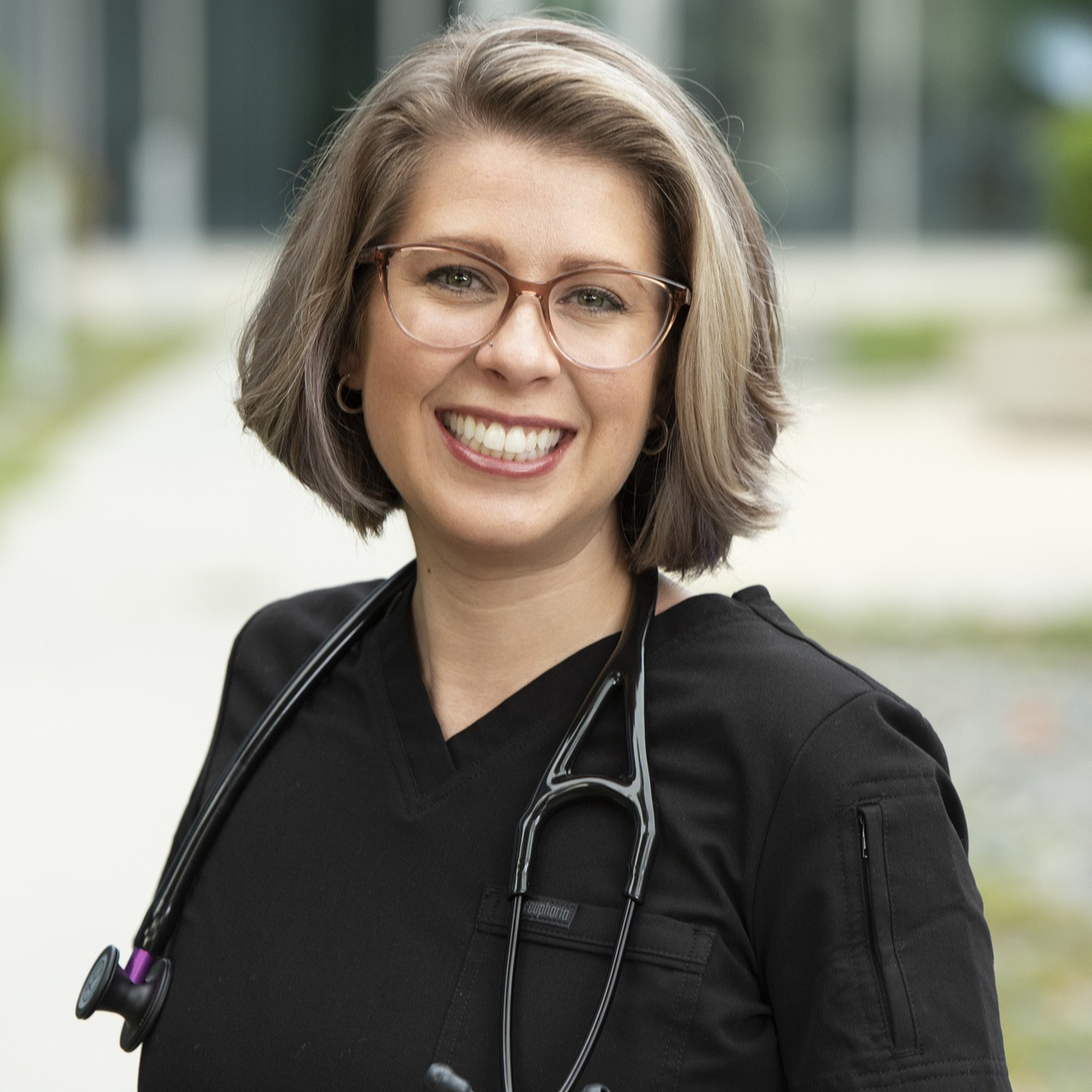
Sarah: The ways I’ve learned the best are not from textbooks. It’s been from hearing the stories and experiences of my colleagues and learning from them. Not just what they did clinically to respond, but watching them, how they responded with those softer skills. How did they manage the difficult family member, or how did they respond to chaos?
I’ve learned so much from that. And so I chose to form my podcast through storytelling. Every episode, I share a real-life story of a patient I encountered; obviously no patient identifiers because I feel the story engages the listener. They would ask, “Oh, man, Sarah, the patient looked like this. What did you do? The patient had these vital signs. How did you respond to them?” The storytelling just gets you. That’s why people like true crime because it’s just stories, right?
But this is not true crime. This is lifesaving, which to me is way better than true crime. So through storytelling, I engage the listener, and they’re asking questions in their head, like “What did Sarah do? What was the diagnosis? What is the treatment? What is the most evidence-based response to this particular presentation of symptoms?”
We know that adult learners learn and retain the best when they have questions. Self-directed learning is the most valuable, at least for me. Something that has no relevance to my practice or no relevance to my life, is not interesting to me. But if this is content I need to know to be a good nurse, a good mom, wife, whatever, then I’m much more engaged.
And I think they can learn a lot, and I intentionally share not just my wins. “There are times when my work is stellar, but also let me tell you about a mistake I made, a huge miss. I was not even recognizing the symptoms pointing me toward this diagnosis.” I want to share both my wins and my misses to empower nurses to feel they have the confidence, the skillset and the knowledge to respond to whatever emergency they may encounter on their shift.
How did your podcast club translate what nurses were learning into patient care?
Jody: A lot of it is that we could do the technical things. We can have our daily ICU rounds and say, “This patient is on a ventilator, they’re sedated, and so on.” But it really makes you think, what are we missing in this patient’s care? And it makes you think about that nursing component; are they having their needs met? Are we doing everything that we can for this patient?
And in talking about that in our daily rounds (because that’s how we implemented it) we started doing daily rounds and talking about A-F. And are we missing any of these components? Are they actually having their physical therapy or any range of motion; anything they can do considering their diagnosis and prognosis? So it made us really think about what these patients need, and if we’re doing it for them.
What makes podcasts such an effective learning tool?
Jody: Podcasts are an effective learning tool because of the accessibility and the portability. You could be driving to work, driving anywhere. Driving is mostly when I listen to my podcast, but at home, doing the dishes or any other mundane activity, I can listen to it anytime. And there’s pause and rewind; if you miss anything, you can always go back and listen to it again.
And I kind of learned late in my adult life that I’m an auditory learner. I can’t read something and it’ll just stick. But if I hear something, I’ll remember it. And especially with podcasts and the format where they’re conversational or even with Sarah’s podcast where it’s only her, but it still feels conversational because she’s talking to you. It just helps to retain all that information.
Sarah: Podcasts are a great teaching and learning modality because of the way that adult learners learn. We want to get our questions answered. We want to learn about things that are applicable to our lives right now. And with podcasts, you have the ability to seek out the answers to the questions you might have, whether that’s about a current patient you just had, or you need to learn more about the diagnosis.
As adult learners, we’re not just sitting in a classroom. We have responsibilities. I’ve got five kids, I’ve got two jobs, I’ve got a house to keep up with. And with podcasts, I can incorporate all the learning that I want to do. I have so much curiosity, but I also have responsibilities. And so I can be doing the dishes and also catching up on evidence-based practice.
I can go quickly through things that I already know about, double speed for that one and then go back to slow it down for ones that are more complicated. Podcasts have just been such a great way to learn more and grow as a nurse. I have learned so much from other educators, and also nurses. I’ve listened to physicians who have podcasts, respiratory therapists, pharmacists, paramedics. So many nursing professionals have podcasts, and I love to learn from the interdisciplinary team as well.
What advice would you give a nurse educator or leader who wants to start a podcast club?
Jody: Some tips to start your own podcast club. I would say find somebody on the unit, any of the nurses on the unit that might take it on and really be champions for the rest of the nurses. Somebody who’s motivated, who will like this modality of learning and also likes to teach because it’s going to take a little bit of buy-in from the other nurses, right? So you have to get them engaged.
And so I would say find those nurses [who want to join], find engaging topics, and find things relevant to the practice that everyone’s excited to learn about. If there’s anything new going on in your unit that is unfamiliar to a lot of nurses, then I would say find those topics they’re excited to learn about, talk about them, and then kind of slowly introduce the podcast modality. Maybe start with a smaller group and get them talking to other nurses and kind of build off that.
Sarah: It might seem overwhelming to take on a podcast club, to be the champion for one, but you don’t have to do a lot of work to get this thing off the ground. Even utilizing tools like AI to take some of the workload off. So, for example, every podcast is automatically transcribed through Apple Podcasts. Just go on their website, copy the whole transcription of the episode, paste it into ChatGPT and say, “Give me 10 discussion questions for our podcast club.” And it will create them for you. You can obviously edit them to fit your team.
What has the podcast club community meant to you?
Jody: In those first two years when I hosted our podcast club, we had maybe 30 participants from our unit, and it just became such a tight-knit little community because we were talking about these really sensitive subjects. In our podcast club discussions, we talked about implicit bias and it was hard.
And so we created this little safe space where we can take these topics we learned about that are very real and affect our patients, and this space became therapeutic, and you learn from each other. You learn from people who come from all walks of life.
Because that’s what the nursing world is, especially in a place like LA. We come from all walks of life. We’ve had different experiences. And so having this meeting time where we can talk about these sensitive subjects and anything else in general, and then apply them to our patients. And our patient care is so meaningful.
Sarah: One of the joys of having my podcast that I wasn’t expecting when I started is the opportunity to meet, interact with, and be encouraged by nurses from all over the globe. I get messages daily from nurses who live in places I could never have visited or come into contact with.
I love the opportunity to impact nurses through education. I never realized how great an impact a podcast has. My mind couldn’t even fathom that I could help a nurse in Saudi Arabia, and I’ve had the opportunity to do that through the podcast, which features nurses from all over the globe. And so yes, that community – people I haven’t met in person, but I’ve talked to online, I’ve interviewed them on my podcast, I’ve interacted with them. It’s been so life-giving.
Share Your Story
Do you or someone you know have an inspiring nurse story to tell? We want to hear from you.
Submit your story idea.