News
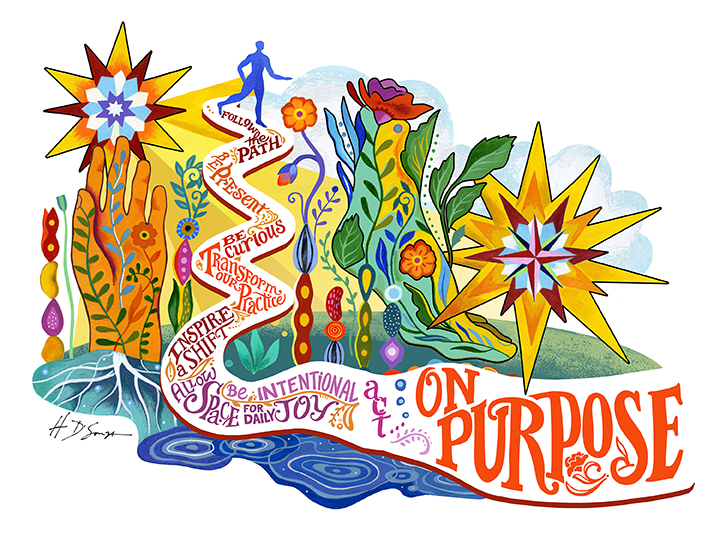
President's Column: On Purpose, With Gratitude
Nov 11, 2025
"Losing love is like a window in your heart / Everybody sees you're blown apart / Everybody sees the wind blow." - Paul Simon, “Graceland
As a new-to-practice RN, I began my career in neuroscience intensive care. Seeing lives transformed by neurological injuries reminded me that life is fragile and precious. I tried, but always struggled, to share with my family the part of my nursing experience that has shaped my values.
Nothing prepares you to hear that a loved one has been admitted to the ICU. I am one of five siblings. Last spring, my oldest sister was admitted to the neuroscience ICU.

“Windswept, In Memory of Amy, 1958-2025” by Rebekah J. Marsh
I have had this conversation with someone else’s family about end-of-life care for their loved one many times. I’ve been careful not to offer false hope, to ask about their values and preferences, and to be mindful that nurses have our own brand of bias toward quality of life over quantity.
Still, it was hard to hear my own family say I was not leaving enough room for hope. It was heartbreaking to see things that others did not. It isn’t always easy to be a nurse. When I am feeling fragile, sometimes I question whether I am strong enough to be a nurse.
Working in the hospital during that time felt complicated. The in-patient clinical environment is hectic, and personal stress can leave you raw and ill-prepared for crucial conversations. I worried: Had I been too abrupt when the outside consultant asked me if I had worked in this hospital for a long time?
He said he remembered me and asked if I had worked in the neuro ICU. It had been eight years. Still, he said my voice confirmed it; he remembered how I cared for his loved one. He remembered how I encouraged him to hold his nephew’s hand; how I helped him during a difficult time. I was filled with the immediacy of my own situation, with my own gratitude for the nurses caring for my sister. His perfectly timed recognition allowed me to assign some meaning to what I was experiencing. My purpose for being a nurse. Small gifts of human connection, even at the end of life.
Nothing prepares you for the loss of your sister, even if you see it coming. Being with other family members makes it easier. I was most grateful to my nurse friends during that difficult time. They easily read between the lines and understood the complexity of my grief and my relief. It is not always easy to be a nurse, but I wouldn’t trade my intimate knowledge of life, illness, dying and death for a different job. I am grateful for each day. Each day is a fragile, precious gift that I try to approach On Purpose and with gratitude.
What are some ways you approach your day with intention, On Purpose and With Gratitude? I’d love to hear from you. Share your thoughts with me at onpurpose@aacn.org.